
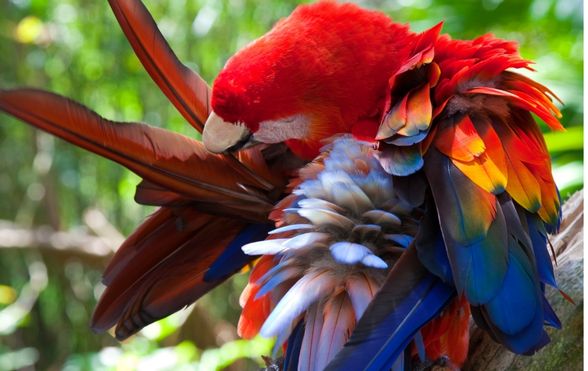
What is feather plucking?
In the wild birds will pluck their feathers for a number of reasons, including to line their nests during breeding season, and also many bird feathers will come out when they perform their normal preening and grooming routine. However, in captivity when a bird is plucking their feathers (not just preening) this is a sign of either; an underlying health condition, environmental/lifestyle factors or nutrition. It is a destructive behavioural disorder that can lead to serious skin infections or more serious complications.
What are the signs of feather plucking?
Some of the signs of feather plucking are:
- Damaged feathers
- Untidy looking feathers
- Broken skin
- Dry flaky skin
- Infection
- Depressed, irritated or stressed behaviour
What are the causes of feather plucking?
There are two primary categories that could cause feather plucking in your bird: medical and behavioural.
Medical
This can be related to the skin and feathers or related to stress from another illness. Medical causes include diet, toxic exposures and infections. Your avian veterinarian will need to ask questions and do a physical exam and lab tests to rule out medical causes. Once medical causes have been ruled out you can then look at behaviour and environmental reasons as to why your bird is feather plucking.
Behavioural
Behavioural causes may include:
- Boredom
- Jealousy
- Sleep deprivation
- Stress/anxiety
- Overstimulated
- Lack of fresh air
- Unsuitable diet
- Insufficient exercise
- Loneliness
How do I stop my bird from feather plucking?
If you notice feather plucking behaviour, contact your avian veterinarian and schedule an appointment for as soon as possible. They will be able to evaluate whether it’s coming from a medical or behavioural issue and will give you advice thereafter.
In the meantime, stay calm and avoid overacting when you see your bird feather picking. They may take your response as positive or take on your stress which could cause the behaviour to continue.
A few steps you could take while you wait for your vet appointment, or more importantly stop it before it starts:
- Stick to a routine
- Minimise stress
- Relive boredom
- Provide a healthy diet
- Examine their environment
What are the treatments for feather plucking?
Once the cause has been established, treatment can begin, if it is due to a medical condition the vet will prescribe medication or supplements to help treat the cause and by doing this the actual feather plucking itself should stop.
If it is due to a behaviour issue, steps should be taken to change the bird’s environment depending on why they bird is showing this behaviour.
Some helpful tips include:
- Making sure your parrot receives a healthy balanced diet
- Ensuring your bird has lots of toys to play with
- Increasing the amount of human interaction
- When the bird is alone providing soft noise or example leaving the radio on
- Ensuring the cage is in a suitable part area, it shouldn’t be too noisily or too secluded
- Providing the bird with the largest environment possible
- Ensuring the bird gets enough sunlight
Do bird’s feathers grow back?
In most cases they will grow back their feathers in about 12 months. However, if the underlying skin structure becomes damaged it might not grow back.
Owning a bird can be a fun and rewarding experience
However, if they suffer an illness or injury, it can also be both stressful and expensive.
British Pet Insurance Services can provide the support you and your bird need, whether it is with your insurance cover, making a claim or just helpful advice along the way.