
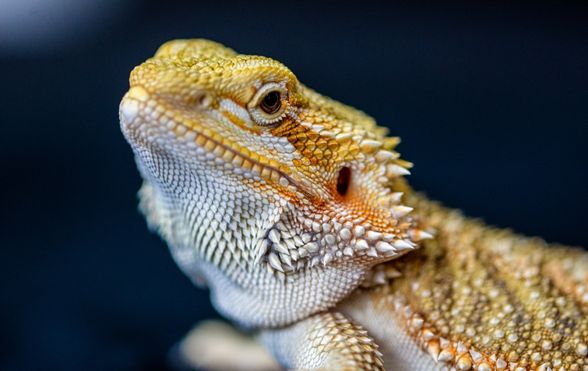
Affectionately known as “beardies”, the bearded dragon is a popular choice for both beginners and seasoned reptile owners. Their gentle nature and easy-going personality earn them a spot in the British Pet Insurance list of friendly reptiles and there are many compelling reasons to keep this reptile as a pet. Their scaly, thorn-like beards may look intimidating but don’t be fooled: beardies are docile creatures that rarely exhibit aggressive behaviours. They are easy to tame, safe to handle and will quickly learn to feel comfortable in your presence.
Still not convinced? Here are some cool and interesting facts about the bearded dragon that may pike your interest.
Bearded dragons wave
If you’re lucky you may witness your dragon stand up on 3 legs and wave with its remaining leg in the air. However they usually only wave at a fellow beardies to signal species recognition so unless you’re looking particularly scaly with a five o’ clock shadow, you probably won’t get a friendly wave from your reptile friend.
Bearded dragons change colour
Beardies regulate their body temperature by changing colour so you can have fun watching their skin switch from a light yellow to a dark brown, much like a chameleon. Find out more about why chameleons change colour.
There is also new research out to suggest that these guys can also specify which body parts change colour for different functions. For example, the beard/chest colour changes during social interaction and the back for temperature regulation. They are more sophisticated then you would think!
Bearded dragons can be leash trained
If you want to take your lizard out for a walk, the good news is beardies are amongst the easiest of the lizard species to leash train due to their docile temperaments. Of course, you still want to proceed with caution when attempting to put a leash on your scaly pal and look out for sign of stress – like the chin area, their ‘beard’ changing to a darker colour.
Bearded dragons produce venom
Another surprising fact about beardies that was uncovered by researchers at Melbourne University in Australia, is that these cute gentle reptiles are in fact venomous. But don’t be alarmed; the type of venom they produce is harmless to humans (phew!). The trait is believed to have evolved as a defence mechanism during the lizard’s hunting days.
A bearded dragon’s body parts don’t grow back
This is one lizard who can’t re-grow its tails, legs or any other body parts (unlike many other lizard species). Reptiles that can drop their tails and grow them back tend to do this out of fear and as a distraction technique to potential predators.
Befriending a dragon doesn’t have to be an unpleasant experience. A beardie is just as friendly as a fluffy pet – you can have a ton of fun interacting with this reptile’s colourful character and unique behaviours.
Owning a Bearded Dragon can be a fun and rewarding experience
However, if they suffer an illness or injury, it can also be both stressful and expensive.
British Pet Insurance Services can provide the support you and your Bearded Dragon need, whether it is with your insurance cover, making a claim or just helpful advice along the way.